01 — Registry
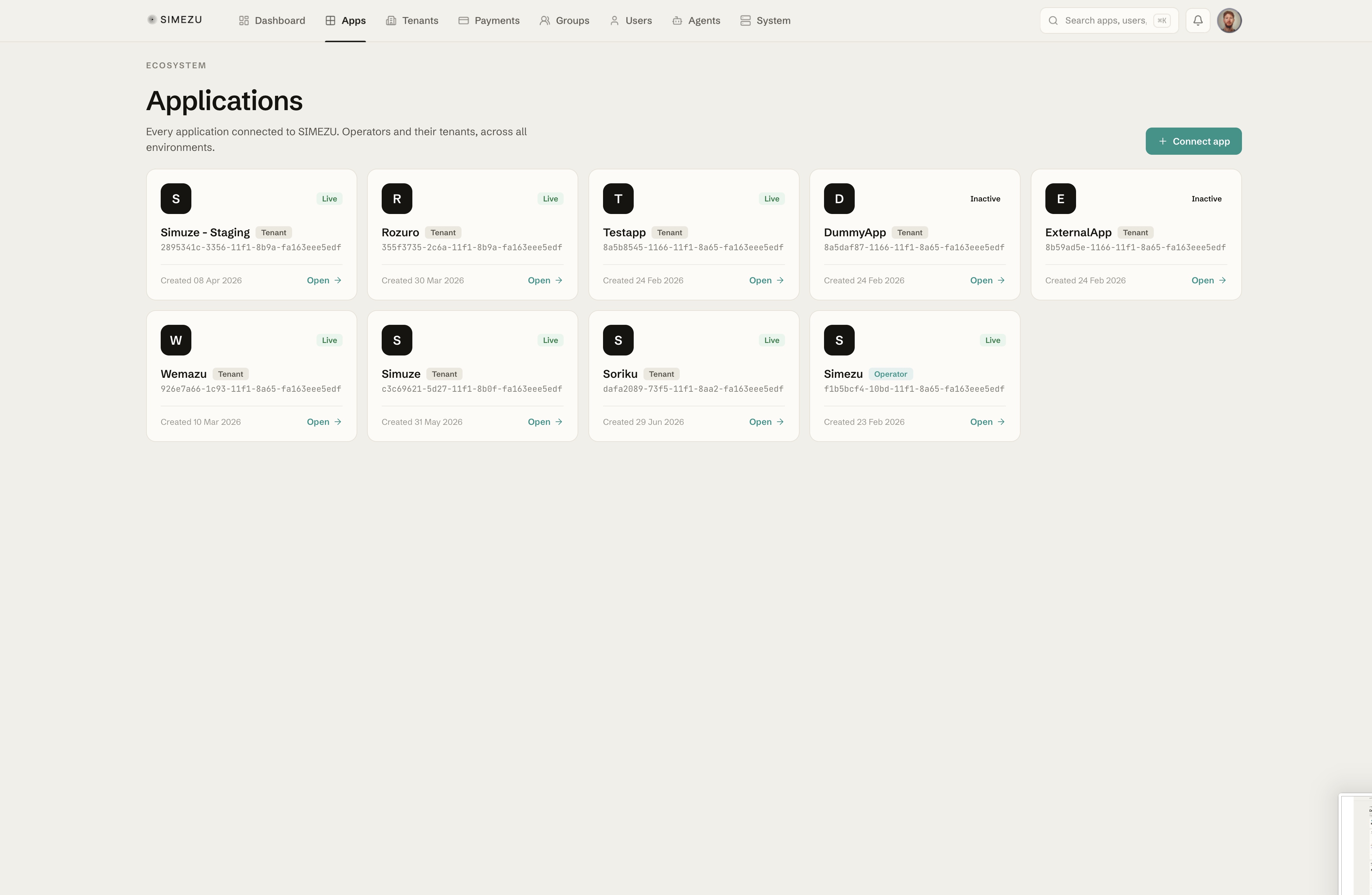
Every app that can ask for a token.
Register first- and third-party applications, rotate client secrets without downtime, and scope tokens per environment. Staging can never sign a production session.
Walkthrough
Scroll. The screen stays put, the story moves.
01 — Registry
Register first- and third-party applications, rotate client secrets without downtime, and scope tokens per environment. Staging can never sign a production session.
02 — Tenants
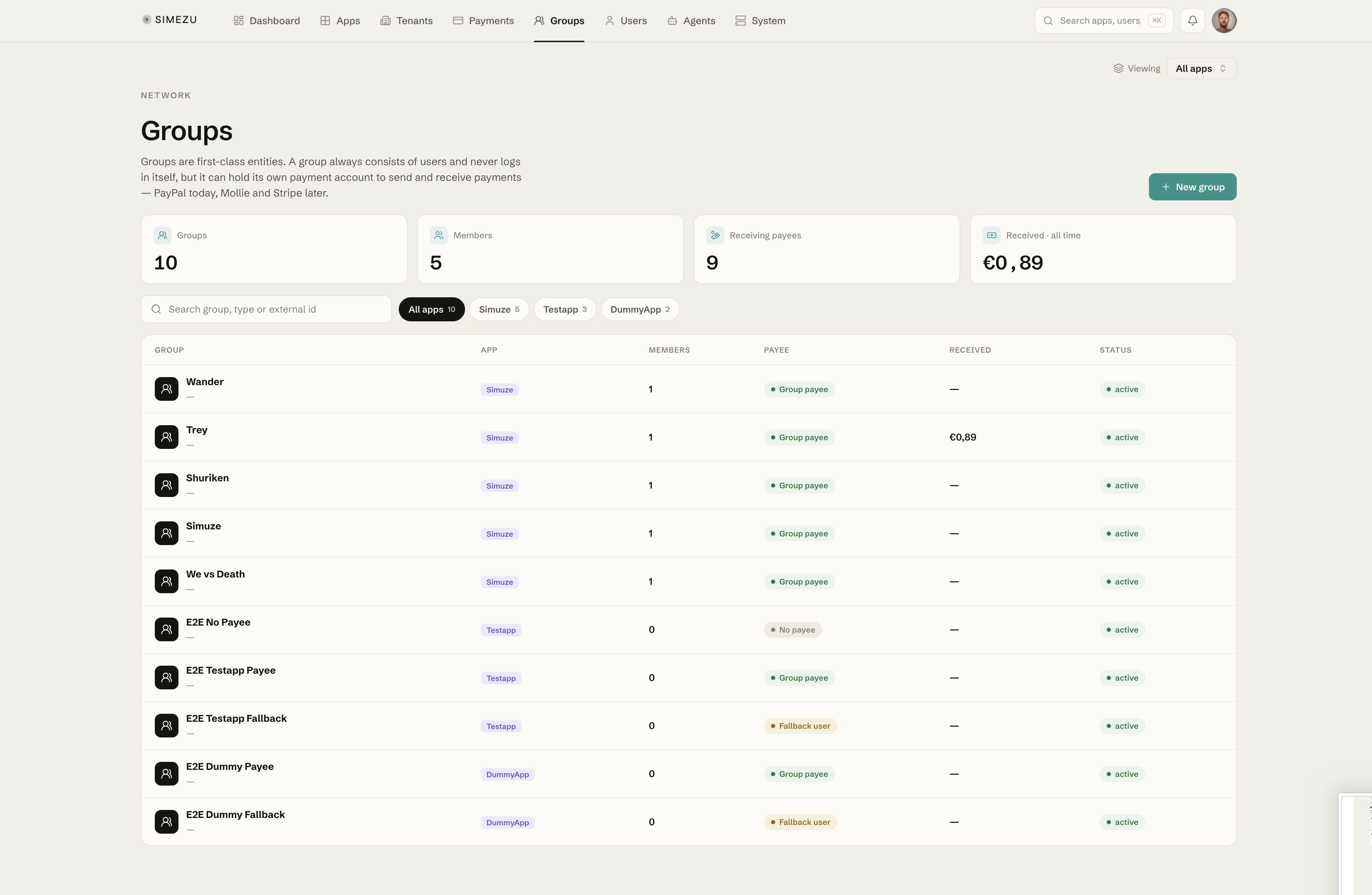
Tenant isolation with inherited role sets. A municipality, an agency and a studio can share the same deployment while seeing strictly their own records.
03 — Webhooks & audit
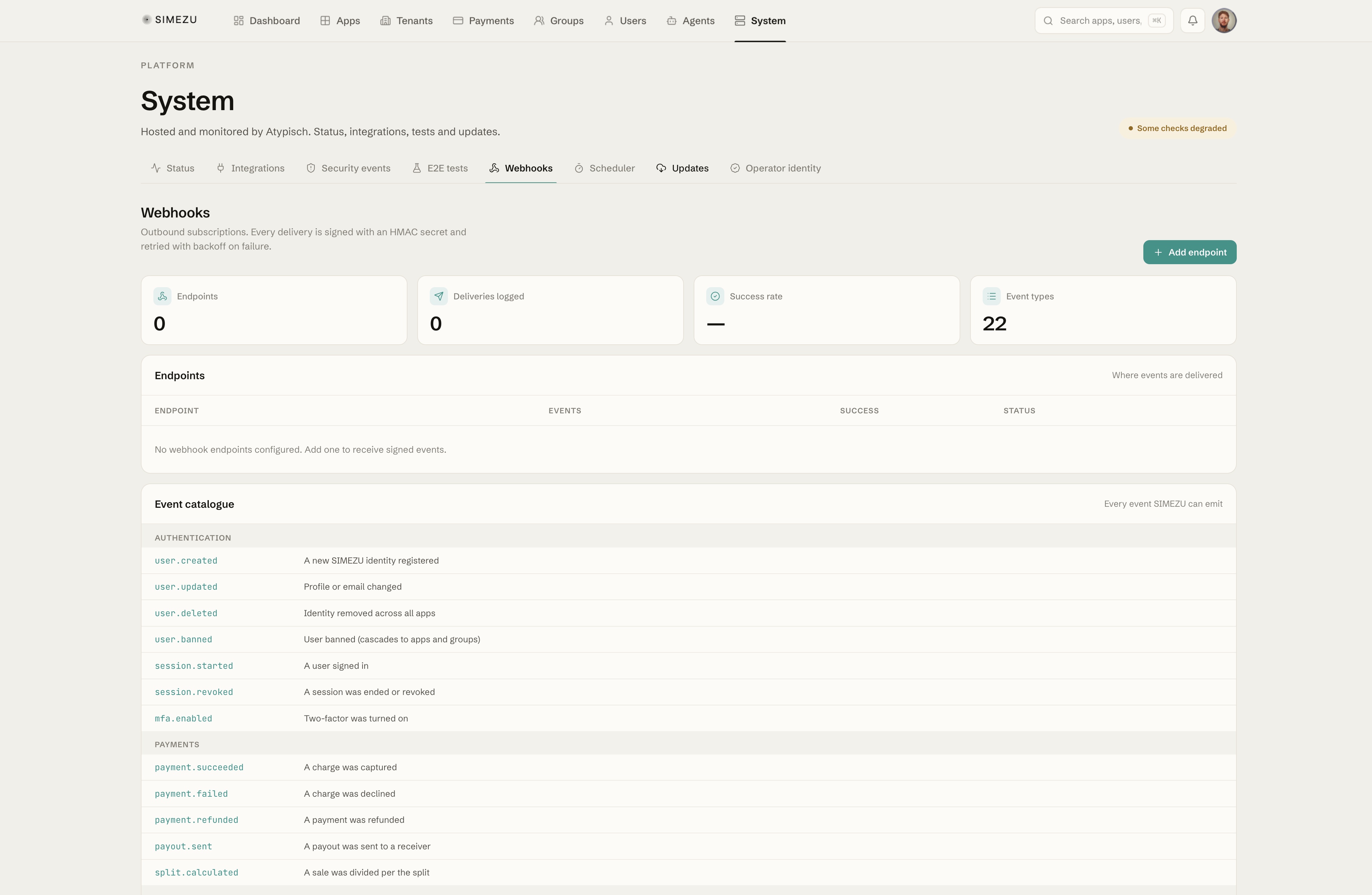
Signed deliveries with automatic retries, and a 90-day audit trail you can replay per tenant. The part auditors ask about first.


Running quietly under every product we ship.
Spec sheet
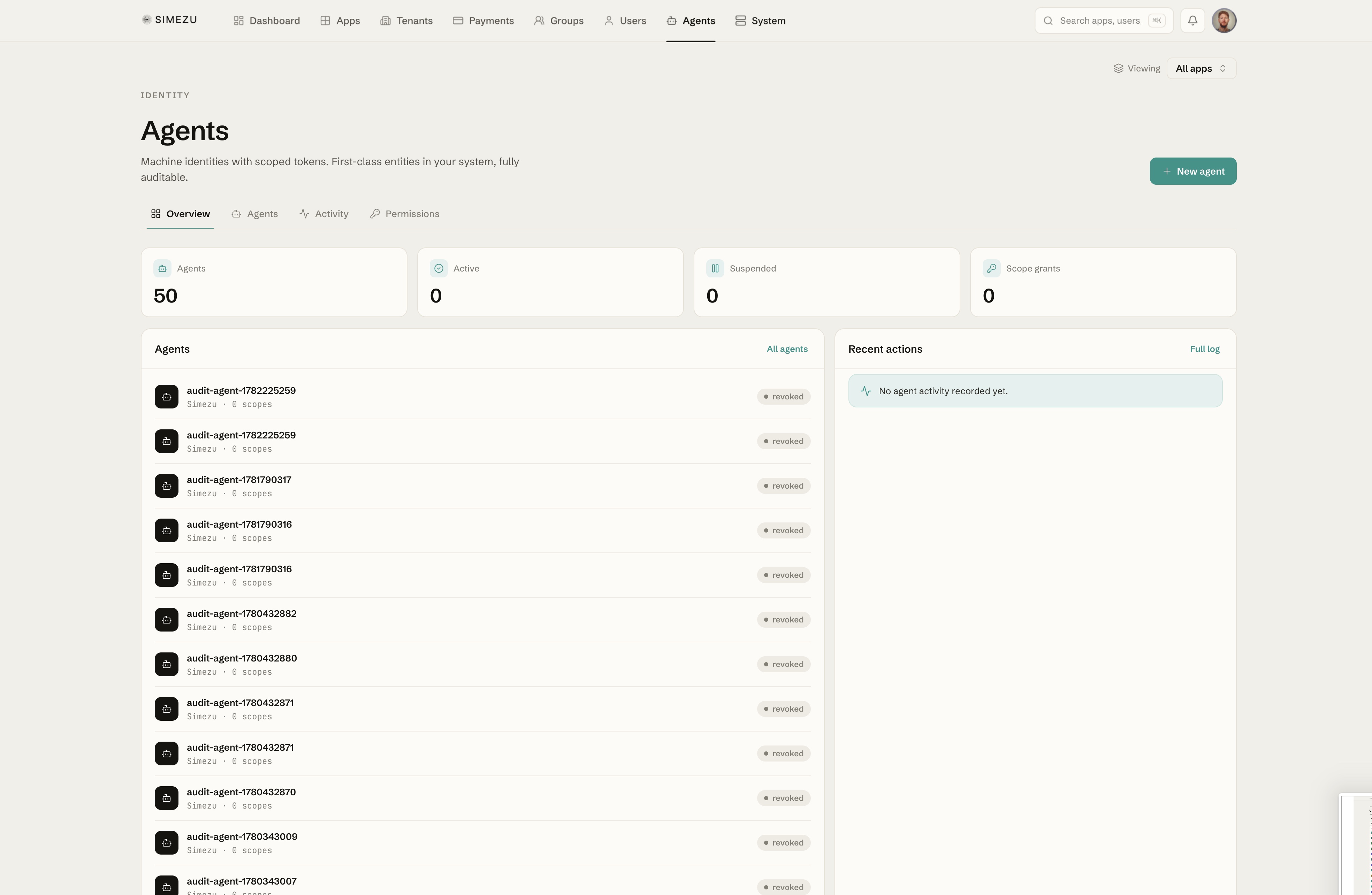
Short-lived access tokens with automatic rotation. Argon2id password hashing. Replay-resistant refresh tokens, optionally bound to client fingerprint.
Standards-compliant authorization-code flow with PKCE, client credentials, device code. Issue tokens for first- and third-party apps from the same registry.
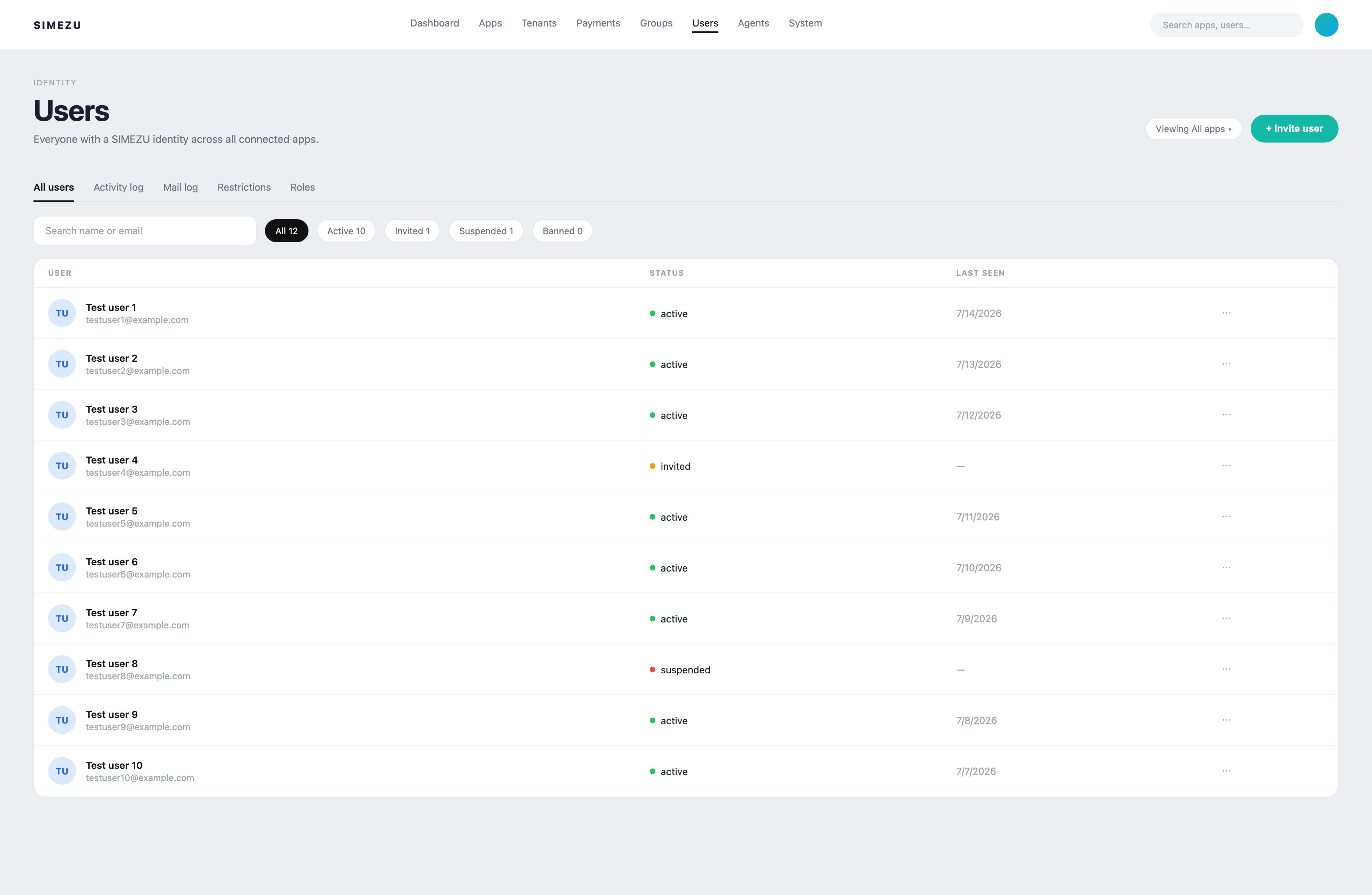
Register your applications, define roles and granular permissions per app. Assign users to roles across apps from one place. RBAC, optional ABAC.
Subscribe to auth events (login, logout, role change, password reset). HMAC-signed payloads, automatic retry with exponential backoff.
EU-native payment processing, refunds, multi-currency, subscriptions. Reconciliation events on the same webhook bus as auth.
Federated login for WordPress front offices. Inherit roles from Simezu, keep WP for content.
Under the hood
Runs on a single Postgres database, one Node process per region. No service mesh, no queue, no Redis. The auth surface is small on purpose.
Releases
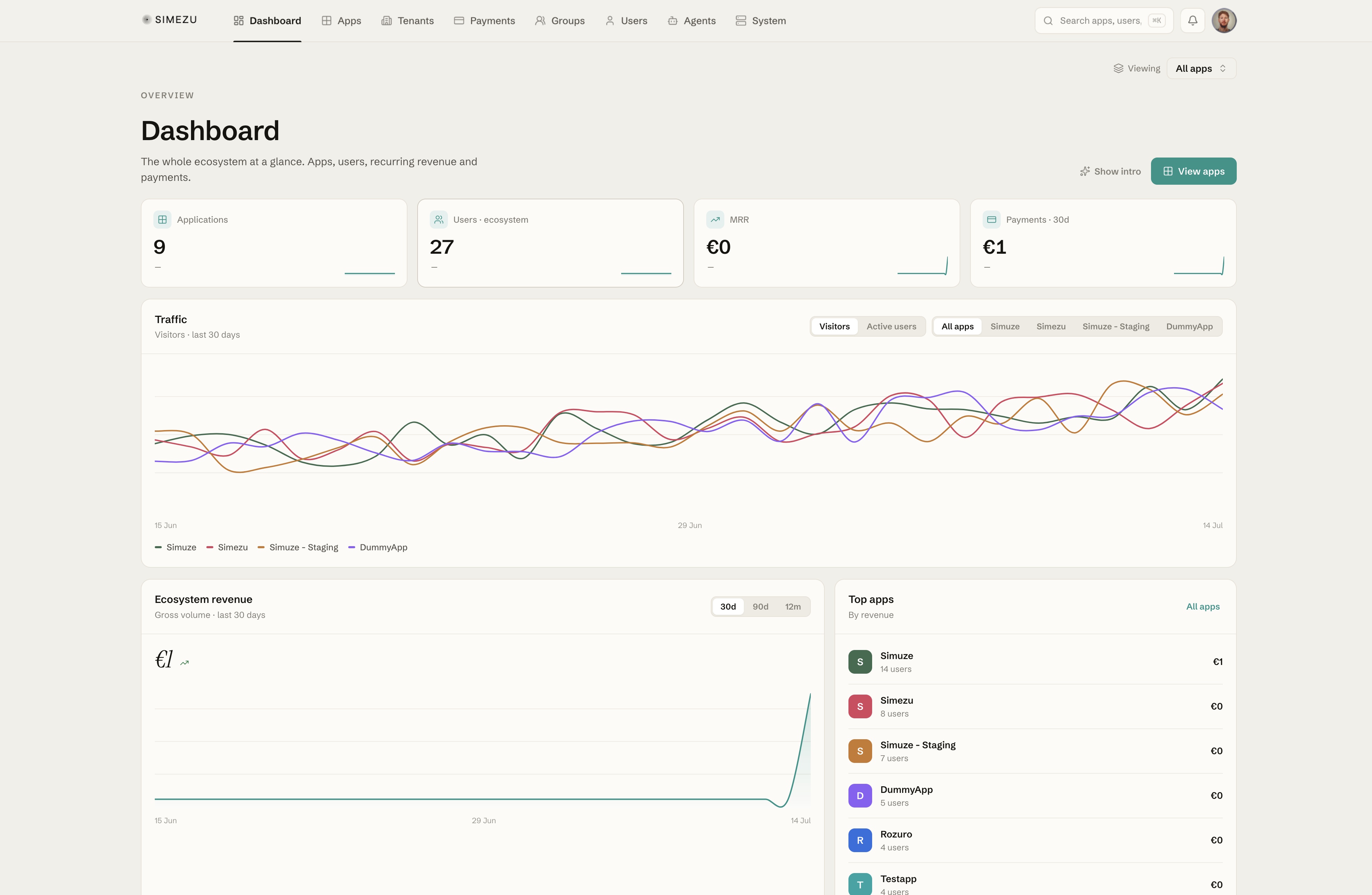
The traffic chart counted new session rows, which badly undercounted real use: a returning user rarely produced a new row and an OAuth code exchange produced none at all. Sign-ins and visitors are now counted as events in their own tables, with no personal data stored, and sessions are kept for ninety days instead of fourteen so the longer views have something to show. Single sign-on logout is bound to the session it belongs to.
Major releaseScheduled jobs are managed from the dashboard instead of a hand-edited server crontab, with run history, locking and seven built-in jobs. Three ways to trigger it, none of which need SSH access. Each application can set when its payout pool is swept, and an unknown schedule fails open so funds are never trapped.
Feature updateSubscriptions can start on a free trial that activates without a payment session and feeds the renewal cycle when it ends. Per-model revenue splits are applied at pool-credit time, where before a configured split did nothing. The authorization server supports OAuth 2.0 PKCE. Monthly commission invoicing is scheduled and catches up on itself, and a payment provider replay can no longer be recorded against two sessions.
Feature updateA design-system overhaul of marketing, dashboard, auth and account surfaces, with the embedded form and avatar SDKs moved onto it and the legacy front end retired. The schema is reconciled with the production model. The OAuth and OIDC keypair is provisioned on first use, where before it silently fell back to a weaker signature.
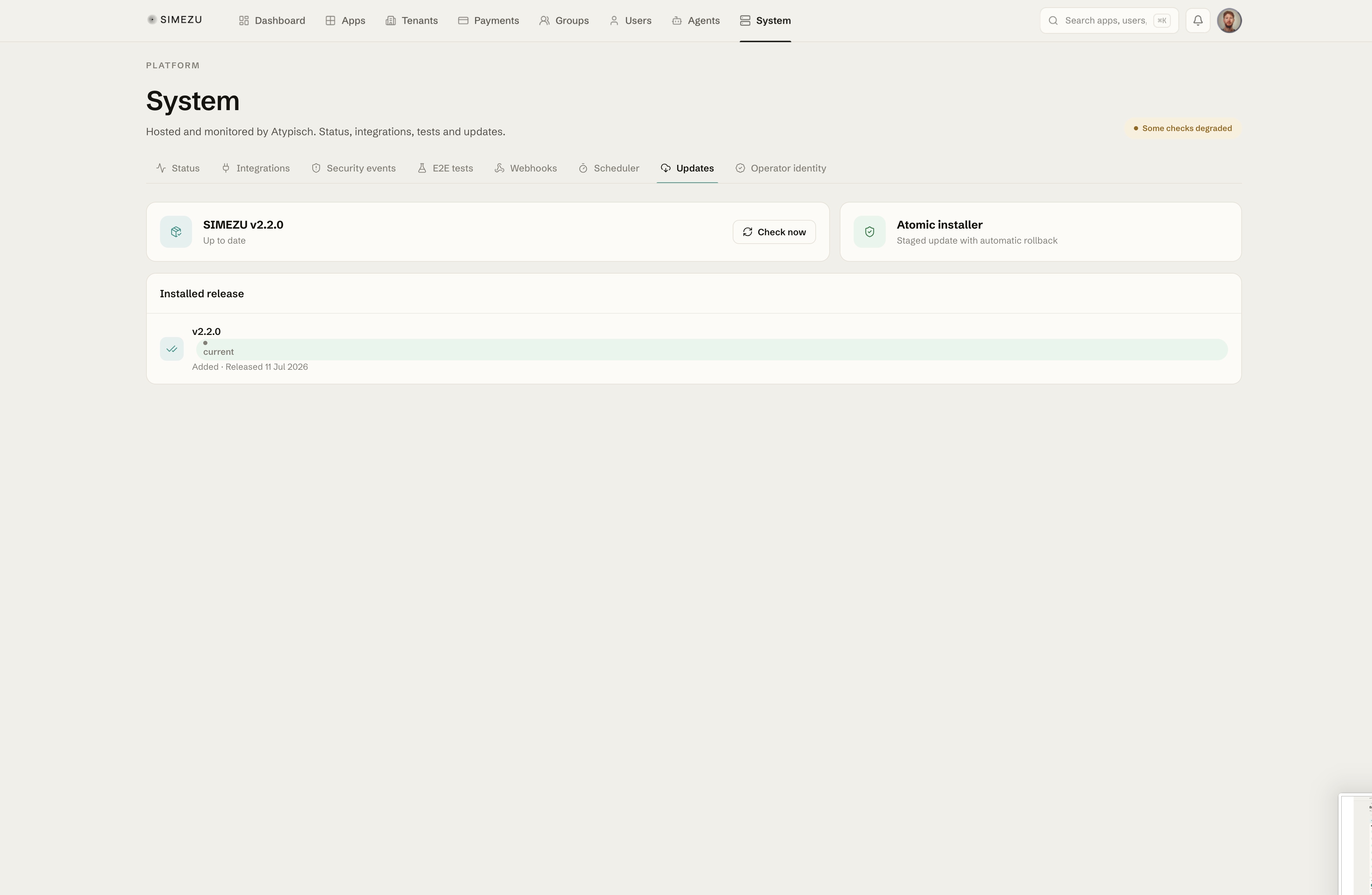
Major releaseA version file, a changelog and a metadata table give every install one answer to which version it runs. A release script rolls the changelog into a dated section and tags it, and the update-status endpoint reports whether a newer release exists. Multitenancy moved from workspaces to applications.
Feature updateMollie payment provider now fully integrated alongside Stripe. Configure per-app which provider handles subscriptions. Automatic reconciliation across providers.
Feature updateSimezu auth and payments layer publicly available. SSO across products, built-in subscriptions, Mollie and Stripe support, GDPR-native with EU data residency.
Major releaseAlso in the family
Lightweight deployment platform between Vercel and Kubernetes. Push code, pick an EU region, run.
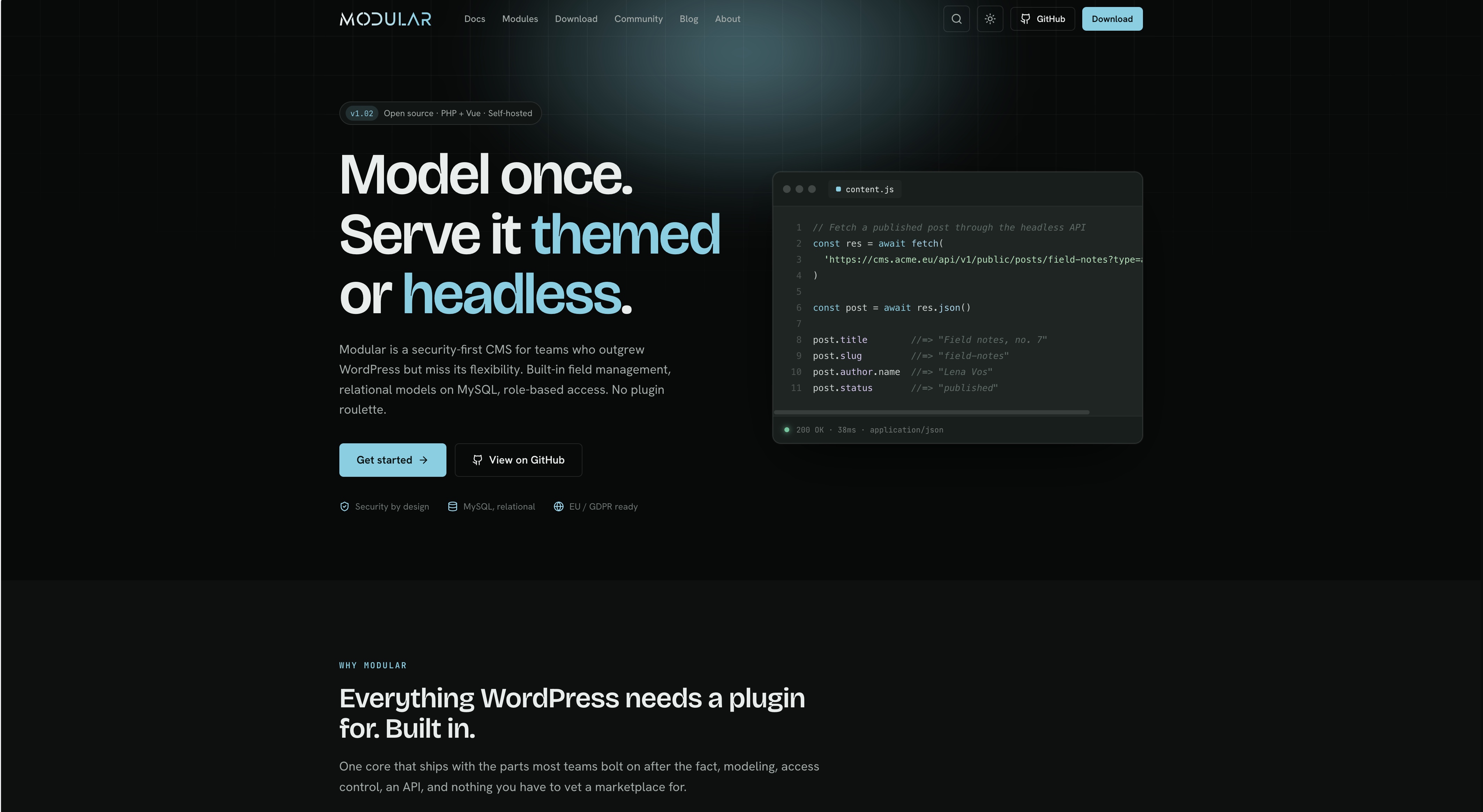
A developer-friendly but user-first CMS with custom post types, custom fields, and multi-language.